
Changing the World of Paine Studies
Learn how an international team of scholars unveiled over 300 newly-discovered works.
By Gary Berton and Scott Cleary
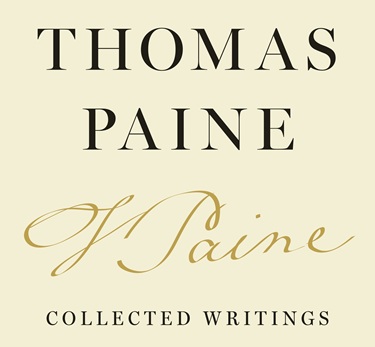
On June 30, 2026, just days before the nation celebrates the 250th anniversary of the signing of the Declaration of Independence, Princeton University Press will publish Thomas Paine: Collected Writings, a six-volume scholarly edition of Paine’s works and correspondence. This new edition—the most up-to-date—comes in a long line of editions of Paine’s works. At least three collections of Paine’s works were published by the end of the 1700s, and at least ten different editions of Paine’s works appeared in the 1800s, by editors with various political ideologies and agendas. The first genuine “collected” writings was published by the radical English publisher Richard Carlisle in England in 1819. For that, Carlisle was arrested and imprisoned for three years. Moncure Conway’s four-volume edition in the 1890s was the culminating event of the nineteenth-century editions.
FOLLOWING IN PAINE’S FOOTSTEPS
Paine had articulated a schema for a modern scholarly edition, thinking about how to organize volumes, and providing historical context to help readers understand his texts. That is what we have done in the Collected Writings. But Paine’s wish never came to pass before he died in 1809.
No such legal jeopardy threatened the current editorial board, which began this project in 2012, during the First International Conference of Thomas Paine Studies. At that conference, a group of Paine scholars came together and agreed that what was needed was a new and reimagined edition of Paine’s works and correspondence.
The standard edition of Paine’s works, Philip Foner’s two-volume Complete Writings of Thomas Paine, published in 1945,were definitely not complete, and really didn’t tell the story of Paine or his writings.Edited and published during WorldWarII,Foner’s edition served its purpose and was an admirable accomplishment on Foner’s part.But it has acted asthe definitive edition upon which dissertations, articles, and books have been written for nearly a century. For Paine studiesto grow, a new, modern collection was necessary.
In 2013 the newly formed editorial board began the painstaking process of organizing the edition. What works should be included? What works had Paine written that newly developed author-attribution software could help identify? What are the gaps in our knowledge of Paine, and how should those gaps be filled? What are the errors in the current editions of Paine’s works? How many letters had Paine actually written? Where might more Paine letters be found? Once we have gathered all the materials for the edition, what format should it take? How many volumes? How should the volumes be organized? Should the volumes be published all at once, or over the course a few years? Who should publish it? And who will pay for it?
WHERE TO BEGIN?
All of these questions and many more were addressed over the next 13 years. Zoom and in-person meetings and literally thousands of e-mails answered some questions and generated others. Research trips to French archives by our French editors, to British libraries by Marc Belissa, and to nearly every major archive east of the Mississippi River by Scott Cleary produced over 300 new works, poems, and pieces of correspondence.
A talk by Carine Lounissi in France sparked the interest of the Nimick Forbesway Foundation, which generously funded the edition for five critical years of research and editorial work. The prior relationship of Gregory Claeys with Princeton University Press, combined with Paine’s New Jersey connections, made the choice of publisher easy.
The nearly 200-page introduction by Gregory Claeys will reframe and re-imagine Paine, his intellectual development, and his global impact in radical new ways. Gary Berton’s expert knowledge of the author attribution software led our discussions of which works Paine may have written or co-written. Yannick Bosc’s expertise in Agrarian Justice and post-revolutionary France produced a slate of new French-language material.
Unlike other United States Founders, this is not called a “papers” project but a “collected writings,” largely because Paine held few official government positions, and therefore does not have a large quantity of documents which can be categorized as “papers.” We are certain that there are many more Paine works, poems, and letters yet to be discovered, which will be added to the digital edition of the Collected Writings, now in development with Princeton University Press.
A NEW PAINE FOR THE TWENTY-FIRST CENTURY
While volumes 5 & 6 offer some of the most interesting of Paine’s new writings, every volume contains new material, texts closest to Paine’s original intentions, and and extensive editorial commentary on both new and familiar Paine writings. For the first time, Paine’s complete literary, political, and religious references are noted, and the full context of Paine’s knowledge, intelligence, and cultural understanding are brought forward in every volume.
In their 2013 review of that First International Conference of Thomas Paine Studies, Ed Larkin and Betsy Erkkila noted that “One of the persistent themes of the conference was the atomization of scholarship on Paine… Paine scholarship is further divided between the French, the British, and the Americans.” This edition acknowledges both “atomization”and “division” as the historical realities of Paine scholarship and the very problems we hope to have addressed and transcended in order to present the most complete collection of Paine’s works and correspondence ever compiled in both print and digital editions. Paine famously wrote that we have it in our power to begin the world over again, and that, we hope, is what we have done.
An Overview
VOLUME 1: 1771-1782
Major American Revolutionary texts, complete annotations for Common Sense, all newspaper articles associated with the Deane Affair, and historically accurate numbering of Paine’s Crisis essays and Forester Letters.
VOLUME 2: 1782-1793 & POETRY
Paine’s contributions to American nation building in the post Revolutionary period, including essays and articles on taxation and the nation’s first bank. The volume also includes Paine’s first works on the French Revolution in both English and French, and a complete set of Paine’s poetry with new poems, and corrected titles.
VOLUME 3: 1793-1809
Paine’s navigation of his imprisonment and post-revolutionary France, and the writings surrounding his return to the United States in 1802. These involve the legacy of the American Revolution in Jeffersonian America, anti-federalist writings, and early nineteenth-century New York City politics. Also, notable works on deism, the emerging freethought movement, and the complete textual history of the “third” part of Age of Reason, and writings that display Paine’s varied interests and explorations.
VOLUME 4: CORRESPONDENCE 1765-1808
A near doubling of Paine’s correspondence, including never-before printed letters from Paine to his parents, Henry Laurens, Dewitt Clinton, Thomas Walker, and major figures of the French Revolution. The earliest letters come from Paine’s time in Lewes, England while he was an exciseman. Letters from Paine to James Monroe are thoroughly annotated, providing new insight into the events leading up to Paine’s imprisonment and eventual release. Paine’s enlightenment social network is greatly expanded, and his final letters to friends and acquaintances in New Rochelle, New Jersey, and New York City show Paine in the most intimate moments of his final days.
TECHNOLOGY-ASSISTED ATTRIBUTIONS
Two volumes that expand our knowledge of Paine’s output in tumultuous times.
VOLUME 5: SUPPLEMENTARY WRITINGS, 1758-1772
One of two volumes compiled with the aid of computer-assisted technology to determine anonymous, pseudonymous, and co-written Paine texts. Includes Paine’s earliest writings, reflecting his deep immersion into British Whig politics of the 1760s and participation in some of the most famous political writings of the eighteenth century: the Junius Letters. It also includes Paine’s writings from the North Briton and other British political journals.
VOLUME 6: SUPPLEMENTARY WRITINGS, 1772-1808
More computer-assisted technology to determine anonymous, pseudonymous, and co-written Paine texts. This volume includes many of Paine’s writings on revolution from before 1774, as well as Paine’s attempts at addressing the legacy of the American Revolution and confronting Thomas Jefferson about the issue of slavery.