
Beacon

Explore articles from The Beacon, the Thomas Paine Historical Association’s bi-monthly journal. Each issue features multiple original articles written by a diverse group of leading Thomas Paine scholars, historians, and experts. Together, these contributions examine Paine’s life, writings, and enduring influence while connecting his ideas on liberty, democracy, and human rights to the political and social issues of today.

Thomas Paine on the Federalists and Oligarchy

Beacon, Beacon May 2025

The Federalist Party, anointed by most historians as the founding party of the new United States, shaped the Constitution, adopted in 1787. Their conservative and nationalist ideas were voiced in 85 newspaper essays, collected in “The Federalist Papers,” to counter arguments against the plan from those who wanted more democracy.

, ,

Thomas Paine on the Federalists and Oligarchy Read Post »

“Reason against unreason” a 1882 illustration by Joseph Keppler and Adolph Schwarzmann shows the “Light of Reason”, containing bust portraits of “Johannes Kepler, I. Kant, Thomas Paine, Jefferson, B. de Spinoza, Franklin, Voltaire, E.H. Haeckel, Tyndall, Huxley, [and] Darwin”, beaming against a large umbrella labeled “Bigotry, Supernaturalism, [and] Fanaticism” – Library of Congress

Brazilian Scholar Discusses Age of Reason and Democracy

Beacon, Beacon March 2025

In a February 15 talk at the Paine Memorial Building in New Rochelle, Dr. Carvalho said, “By criticizing the adulterous connection between church and state… Paine had devastating effects on the governments using religion to maintain hierarchies and oppression.” 

, , ,

Brazilian Scholar Discusses Age of Reason and Democracy Read Post »

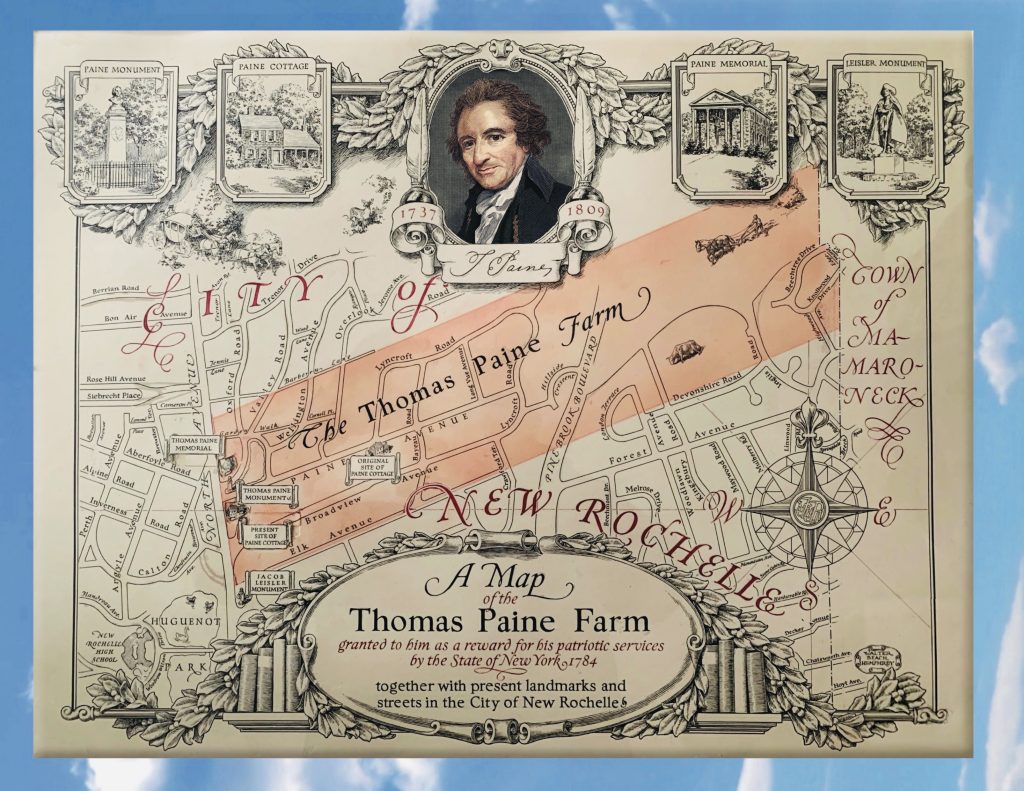
A map of the farm granted to Thomas Paine in 1794. The New York State Legislature awarded Paine 320 acres in New Rochelle for his service in the Revolutionary War after confiscating the land from a British loyalist. The map was created by New Rochelle native Walter Beach Humphrey

The Comstock Act and 1900s Leadership of the Thomas Paine National Historical Association

Beacon, Beacon January 2025

When most founding members of the Thomas Paine National Historical Association no longer served on the TPNHA board, others joined the association and took active leadership roles. They reflected the founding philosophy and ideas that prevailed at the turn of the century. 

, ,

The Comstock Act and 1900s Leadership of the Thomas Paine National Historical Association Read Post »

Thomas Paine Memorial Building sketch by Robert Emmett - American Philosophical Society

The Comstock Act and the Founders of the Thomas Paine National Historical Association

Beacon, Beacon November 2024

Responding to assaults on civil liberties under the 1873 Comstock Act, freethinkers played central roles in the social reform movement opposing abuses of the rich and powerful in the Gilded Age. They were guided by Thomas Paine and Enlightenment Age ideals of democracy, equality and natural rights. 

,

The Comstock Act and the Founders of the Thomas Paine National Historical Association Read Post »

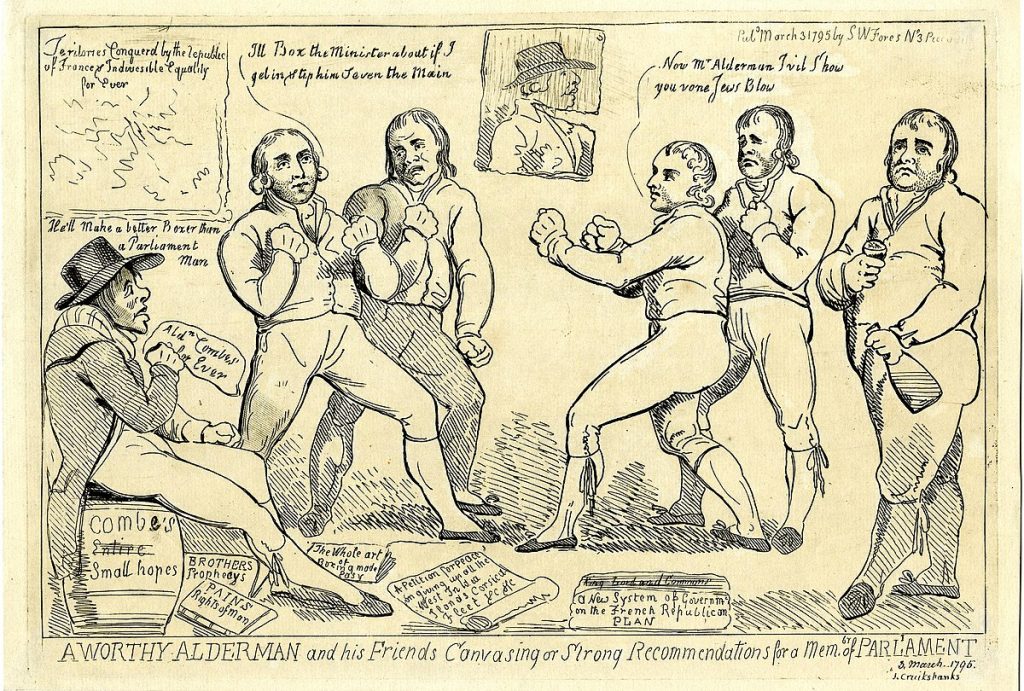
"A worthy Alderman and his friends canvasing or strong recommendations for a membr of parliament" a 1795 satirical political cartoon by Isaac Cruikshank. On the ground are books and papers including "Pains Rights of Man" - © The Trustees of the British Museum 

Rights of Man is More Relevant Now than Ever 

Beacon, Beacon September 2024

I believe it’s no accident that current social beliefs and trends uncannily reflect those in the 18th and 19th centuries. Many Americans still believe that assistance to the poor encourages sloth. Meanwhile, there is little interest in funding public K-12 education or in making higher education more affordable. 

Rights of Man is More Relevant Now than Ever  Read Post »

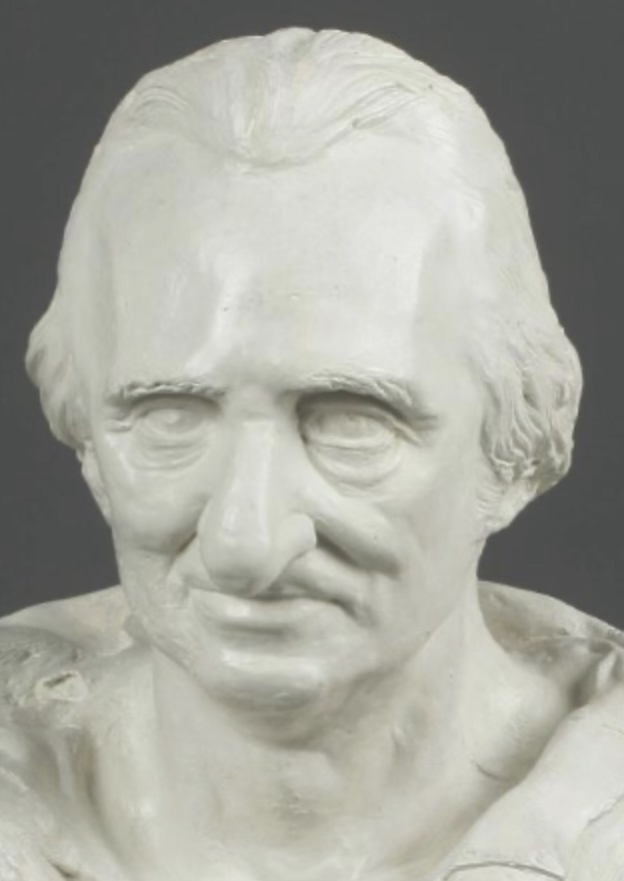
“Thomas Paine” a 1809 sculpture by John Wesley Jarvis based on his death mask - New York Historical Society Museum & Library

A History of Thomas Paine’s Biographies 

Beacon, Beacon September 2024

historian Yannick Bosc wrote, “Behind the smoke from the censer, there are always sulfurous fumes floating around Thomas Paine.” 200 years of historiographical inquiry still leaves us with too many questions. We can only look forward to the new, impartial, unbiased, and well-researched works that are yet to come.

,

A History of Thomas Paine’s Biographies  Read Post »

The Comstock Act of 1873 and the Founding of the Thomas Paine National Historical Association

Beacon, Beacon September 2024

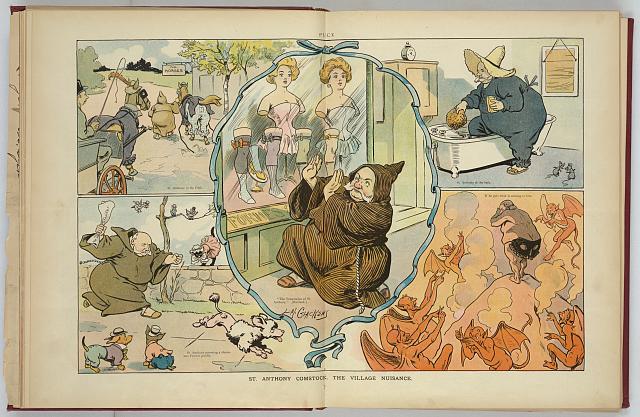
Starting in 1872 and completed in 1873, the Comstock Act brought the weapon of religion against these groups. It was named for Anthony Comstock, a zealous Christian anti-“vice”fanatic who was put in charge of using the Act against the democratic forces emerging.

,

The Comstock Act of 1873 and the Founding of the Thomas Paine National Historical Association Read Post »

Bicentennial of the ‘Farewell Tour’ by the Marquis de Lafayette

Beacon, Beacon July 2024

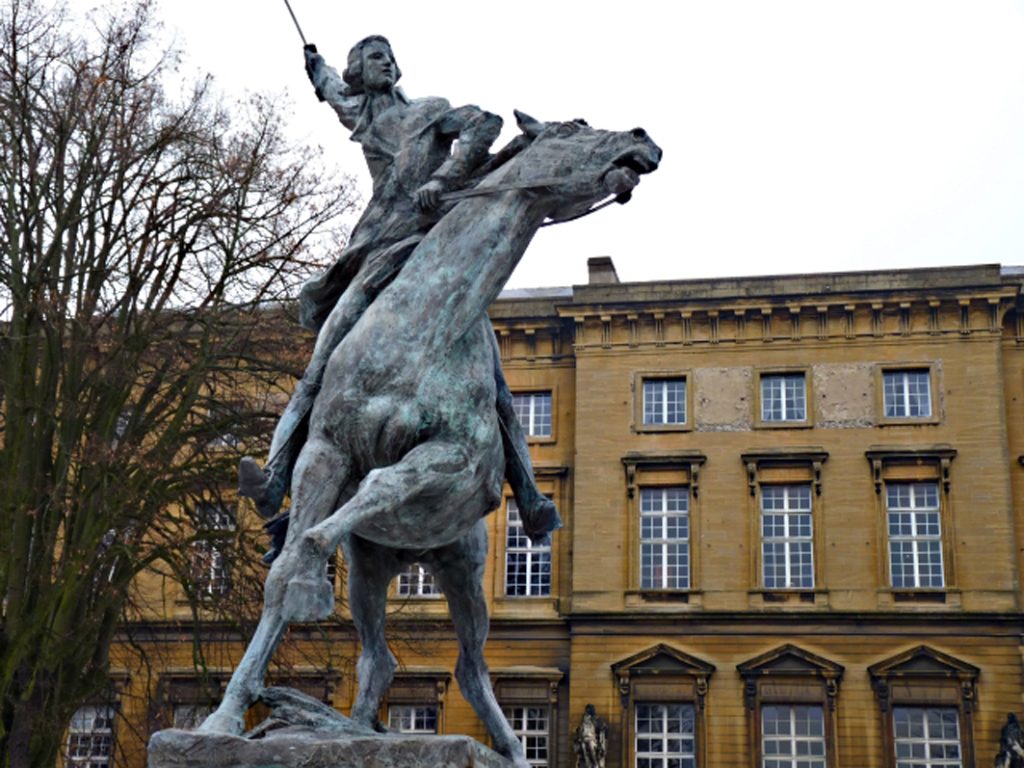
Celebrating the 2024 bicentennial of Lafayette’s visit to New Rochelle, the Thomas Paine National Historical Association (TPNHA) and the Huguenot & New Rochelle Historical Association (H&NRHA) in cooperation with the American Friends of Lafayette (AFL) and the City of New Rochelle will offer free events.

Bicentennial of the ‘Farewell Tour’ by the Marquis de Lafayette Read Post »

Paine’s Agrarian Justice Resonates Most with Me

Beacon, Beacon July 2024

Paine’s Agrarian Justice most resonates with my own personal sensibilities. He says, “Civilization, therefore, or that which is so called, has operated two ways, to make one part of society more affluent, and the other part more wretched, than would have been the lot of either in a natural state.” 

Paine’s Agrarian Justice Resonates Most with Me Read Post »

Scroll to Top